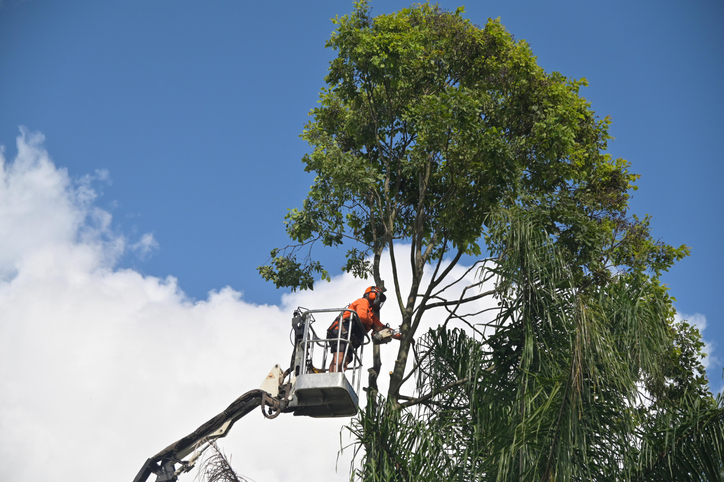
A viral Reddit post recently captured what many homeowners across the country have quietly witnessed for years: a healthy, mature street tree — not blocking sidewalks, not touching power lines, not causing any visible damage — reduced to a stubby, stripped-down stump of its former self. The culprit? The neighborhood HOA.
The original poster’s question — “Why is my HOA doing this?” — struck a nerve. Thousands of homeowners chimed in with similar horror stories. The practice at the center of the outrage is called tree topping, and while it’s widely condemned by arborists and horticulture professionals, it remains surprisingly common in HOA-managed communities.
If you’ve ever watched a landscaping crew hack away at perfectly healthy trees in your neighborhood and wondered what on earth they were thinking, this article is for you.
What Is Tree Topping, and Why Is It So Controversial?
Tree topping — sometimes called “hat-racking,” “tipping,” or “rounding over” — is the indiscriminate cutting of tree branches to stubs or lateral branches that are too small to assume the terminal role. The result is a dramatically altered tree that bears little resemblance to its natural form.
The International Society of Arboriculture (ISA), one of the most respected authorities on tree care worldwide, considers topping one of the most harmful practices that can be performed on a tree. According to the ISA, topping removes a significant portion of a tree’s leaf-bearing crown — the very engine of its food production. The wounds created by topping are also large and difficult for trees to compartmentalize, opening pathways for disease and decay.
“Tornadoes do less damage,” one Reddit commenter wrote, and they weren’t far off. A properly maintained tree rarely needs dramatic intervention. When it does, certified arborists follow ANSI A300 pruning standards, which are designed to protect tree health while achieving safety and aesthetic goals.
Why Do HOAs Keep Doing It?
The short answer: money and control.
Topping dramatically reduces a tree’s size in the short term, which means fewer overhanging branches to manage each season. For HOA boards working with tight landscaping budgets, it can look like a cost-effective solution. The problem is that it’s not. Topped trees respond by sending up a flush of fast-growing, weakly attached shoots called “water sprouts.” These grow back faster than the original canopy — and they’re structurally weaker.
Within a few years, the board is back to the same problem, with a tree that’s now more dangerous, less aesthetically appealing, and harder to manage than before.
Some HOAs may also be responding to complaints from individual homeowners — about leaves, shade, or roots affecting driveways. Others may not have clear landscaping guidelines at all, leaving board members or hired contractors to make consequential decisions without professional oversight.
This is precisely why communities benefit from working with professionals who specialize in responsible, long-term property management. For example, communities that partner with HOA landscaping services in Alpharetta, GA gain access to crews trained to maintain trees and green spaces according to industry standards — not just short-term convenience.
The Real Costs of Bad HOA Tree Decisions
The damage from improper pruning extends well beyond aesthetics. Here’s what homeowners and HOA boards often fail to account for:
Structural hazard. Water sprouts that replace a topped canopy are attached with weak wood. During storms, these limbs are far more likely to fail — creating genuine liability for the HOA.
Property value decline. Research from the USDA Forest Service shows that mature, healthy trees can add anywhere from 3% to 15% to a home’s value. Strip those trees, and you strip the neighborhood’s curb appeal and property values along with them.
Heat and environmental impact. Urban trees provide critical shade, reduce the urban heat island effect, and absorb stormwater runoff. Removing or severely damaging them increases cooling costs and contributes to environmental degradation.
Long-term maintenance expense. A topped tree becomes a management burden. Water sprouts must be removed repeatedly, and a structurally compromised tree may eventually require full removal — far more expensive than proper pruning would have been.
What Are Homeowners’ Rights When an HOA Damages Trees?
This is where the situation gets complicated — but homeowners are not without options.
Review the CC&Rs and bylaws. Your community’s Covenants, Conditions & Restrictions (CC&Rs) often contain provisions about landscaping and common-area maintenance. Some explicitly require professional standards; others are vague. Knowing what’s written is the first step.
Request documentation. Ask your HOA board what professional guidance — if any — was provided before the tree work was performed. If a certified arborist was not consulted, that’s a significant gap worth highlighting.
Attend HOA meetings. Persistent, organized homeowner advocacy has successfully pushed HOA boards to amend bylaws and require professional landscaping oversight. Show up, speak up, and bring receipts — photos, expert opinions, and property value data are compelling tools.
Consult a real estate or HOA attorney. In cases where an HOA’s actions have demonstrably damaged property values or violated its own bylaws, legal remedies may be available. The Community Associations Institute (CAI) is a national resource for understanding HOA governance and homeowner rights.
File a complaint. Some states have HOA regulatory bodies or ombudsman programs. In Georgia, for example, the Georgia Department of Community Affairs provides resources for homeowners in disputes with associations.
How to Push for Better Landscaping Standards in Your HOA
Change from within is possible — and often more effective than confrontation.
- Build a coalition. You’re almost certainly not the only neighbor who’s frustrated. A group of homeowners carries far more weight than a single complaint.
- Bring in a professional assessment. A certified arborist can provide a written evaluation of the trees and recommend proper maintenance plans. This gives your advocacy credibility and gives the board a viable alternative.
- Propose a landscaping policy amendment. Draft a clear proposal requiring that all tree work be performed or supervised by an ISA-certified arborist. Frame it as a liability protection measure for the board — because it is.
- Request competitive landscaping bids. If the current contractor is cutting corners, getting multiple bids from reputable companies may reveal better options at comparable prices.
- Document everything. Photograph trees before and after work. Keep records of correspondence. If the situation escalates to a legal dispute, documentation is everything.
What Good HOA Landscaping Actually Looks Like
Responsible HOA landscaping is proactive, not reactive. It’s guided by a long-term maintenance plan rather than whoever shows up with a saw. It distinguishes between trees that genuinely need intervention and those that are healthy and need only routine care.
Good contractors assess each tree individually. They know that a tree growing between a sidewalk and a road — as in the Reddit post — may require root management or minor canopy adjustments, not wholesale destruction. They follow ANSI pruning standards, use proper cuts that promote healing, and provide documentation of the work performed.
Communities that invest in this kind of care aren’t just protecting their trees. They’re protecting their residents, their property values, and ultimately, their HOA’s legal standing.
The Bigger Picture: Urban Trees Matter
It’s easy to frame this as a neighborhood dispute, but the stakes are genuinely broader. Urban trees are a critical public resource. According to the American Forests organization, the United States has lost hundreds of millions of urban trees in recent decades, with serious consequences for air quality, mental health, and climate resilience.
Every mature street tree that gets needlessly topped or removed is a loss that takes decades to replace. A 30-year-old oak can’t be replanted and grown back in a budget cycle. When HOAs make careless decisions about the trees in their care, the community bears those costs for generations.
That’s not hyperbole. That’s horticulture.
Frequently Asked Questions
Is tree topping ever acceptable?
In very limited circumstances — such as certain utility line clearance situations or specific species management — some aggressive pruning may be necessary. But true topping as commonly practiced by some landscaping contractors is not considered acceptable by arboricultural standards. Alternatives like crown reduction, directional pruning, or crown raising almost always achieve the same goals without the damage.
Can my HOA legally damage or remove trees without homeowner consent?
This depends entirely on the community’s CC&Rs and local ordinances. Trees in common areas are typically under the HOA’s jurisdiction. However, many communities have tree protection ordinances that apply regardless of who owns the land. Check with your local municipality and review your CC&Rs carefully.
What should I do if my HOA has already topped my neighborhood’s trees?
Document the before-and-after condition thoroughly with photographs. Consult an ISA-certified arborist for a professional assessment. Then bring that documentation to the HOA board in writing and request a formal response. If the damage is significant, consulting an HOA attorney about next steps is worth considering.
How can I find out if my state has HOA oversight or an ombudsman?
The Community Associations Institute (CAI) maintains state-by-state resources. Several states — including Florida, Virginia, and Colorado — have formal HOA dispute resolution programs. Many states do not, which makes proactive bylaw advocacy all the more important.
Do topped trees recover?
Some do, partially. A tree may survive topping but will likely produce weak, fast-growing water sprouts rather than a healthy canopy. Long-term structural integrity is compromised. Recovery depends heavily on the species, the tree’s overall health before topping, and the care it receives afterward.
For homeowners in Georgia and surrounding areas, connecting with a reputable landscaping provider is one of the most effective ways to advocate for better HOA maintenance standards. Communities seeking responsible, professional care can explore HOA landscaping services in Alpharetta, GA as one example of what expert-guided community landscaping looks like in practice.




Leave A Comment