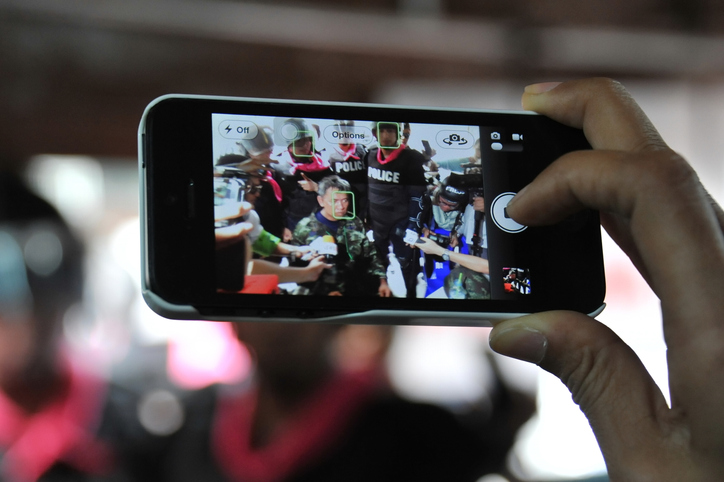
Citizen journalism has transformed from a niche internet phenomenon into one of the defining forces in modern news. Ordinary people with smartphones are now breaking stories, documenting injustice, and filling gaps that professional newsrooms can no longer cover. But the same tools that made this possible have also flooded the information ecosystem with unverified claims, emotional manipulation, and outright falsehoods. So where does citizen journalism actually land — as a net benefit to society, or a net threat?
The answer, as with most things in media, is complicated. Citizen journalism has done real and measurable good. It has also caused real and measurable harm. Understanding both sides isn’t an academic exercise — it matters for anyone who consumes news, shares information online, or cares about the health of public discourse.
What Citizen Journalism Actually Is
Citizen journalism — sometimes called participatory journalism or grassroots journalism — refers to ordinary people collecting, reporting, and distributing news, typically through social media, blogs, and digital video platforms. It’s not a new concept. Alternative and underground media existed in the 1960s and 70s. But it wasn’t until smartphones became ubiquitous and platforms like Twitter, Facebook, and YouTube scaled globally that citizen journalism became a genuine parallel track to professional news.
The term gained its modern meaning in the early 2000s, but its cultural weight arrived in a series of flashpoints: the 2004 Indian Ocean tsunami, captured in real time by tourists; the 2011 Arab Spring, where social media posts became primary news sources; and the Black Lives Matter movement, which was powered in large part by bystander video of police violence. In each case, citizen reporters documented events that traditional newsrooms either missed entirely or arrived at too late.
Today, citizen journalism is woven into the fabric of how news is made. Major outlets routinely incorporate user-generated content. Hashtags become story assignments. A single phone video can trigger a national conversation before any professional journalist is on the scene.
The Case for Citizen Journalism
Filling the Local News Void
The collapse of local news in America has been well-documented and ongoing. According to the Medill State of Local News Report 2025 from Northwestern University, 136 newspapers shuttered in the past year alone — a rate of more than two closures per week. The newspaper industry has lost more than three-quarters of its jobs since 2005, and 213 U.S. counties now qualify as news deserts, leaving roughly 50 million Americans with limited or no access to reliable local coverage.
Into that void, citizen journalists have stepped. Community Facebook groups, neighborhood Substacks, and local YouTube channels now report on school board meetings, zoning decisions, and city council votes that no professional outlet has the staff to cover. Imperfect as they are, these outlets represent something — and something is meaningfully different from nothing when your town has no newspaper.
Accountability That Professional Media Missed
Some of the most consequential acts of citizen journalism have directly exposed abuses of power that official narratives tried to bury.
The clearest example is Darnella Frazier. On May 25, 2020, the then-17-year-old Minneapolis teenager filmed Derek Chauvin kneeling on George Floyd’s neck for nine minutes and 29 seconds. The Minneapolis Police Department’s initial statement described Floyd’s death as a “medical incident during police interaction.” Frazier’s footage — posted to social media within hours — immediately contradicted that account. The video became central evidence in Chauvin’s murder trial and ignited a global protest movement against police brutality. In 2021, the Pulitzer Prize Board awarded Frazier a special citation for “courageously recording the murder of George Floyd, a video that spurred protests against police brutality around the world, highlighting the crucial role of citizens in journalists’ quest for truth and justice.”
That case was not an anomaly. Bystander video has played a decisive role in documenting police violence going back to the 1991 Rodney King beating, and citizen reporting from the Arab Spring gave the outside world visibility into political repression that state-controlled media actively suppressed.
Amplifying Marginalized Voices
Professional journalism has a well-documented diversity problem. Newsrooms have historically been staffed by people who do not reflect the full breadth of their communities, which shapes what gets covered and whose perspective is centered. Citizen journalism, for all its flaws, has been one of the major factors in giving the silenced a voice and fostering community involvement. Stories about immigrant communities, rural poverty, environmental injustice, and Indigenous rights often reach national audiences only because someone on the ground — without a press pass — decided to document and share what they were seeing.
Speed and Proximity
When a disaster strikes, professional journalists need time to deploy. Citizen journalists are already there. During the early hours of breaking events — natural disasters, mass casualty incidents, civil unrest — the first footage, the first accounts, and often the most accurate ground-level picture come from people who happen to be present. This isn’t a small thing. Speed and proximity can shape public understanding before official narratives solidify.
The Case Against — or at Least, the Serious Concerns
Misinformation Travels Fast and Far
The most significant danger of citizen journalism isn’t that bad actors are trying to deceive the public — though that happens — it’s that well-intentioned people share things they haven’t verified, and platforms are optimized for engagement rather than accuracy.
A landmark study by MIT researchers found that false news spreads faster on social media than true stories. The mechanism is largely emotional: false stories tend to be more novel and provoke stronger reactions, which drives sharing. This means misinformation doesn’t need an organized campaign behind it. Panic, outrage, and confusion spread it perfectly well on their own.
The problem is compounding. A 2024 study by Indiana University found that a tiny fraction of users — just 0.25% of accounts on X — were responsible for 73–78% of all low-credibility content on the platform. Some of these accounts were verified, lending an air of legitimacy to the falsehoods they amplified. The World Economic Forum’s Global Risks Report identified AI-generated misinformation as the top global risk over the next two years — ahead of climate change and armed conflict.
No Editorial Gatekeeping
Professional journalism operates with editors, fact-checkers, legal review, and established standards for verification. These systems are imperfect and occasionally captured by institutional biases, but they exist for a reason. Citizen journalism, by definition, bypasses all of them.
Research published in Humanities and Social Sciences Communications makes this structural problem explicit: unlike professional journalists constrained by editorial policy and codes of ethics, citizen journalists typically operate without any official training or supervision. That autonomy creates the speed and the independence that makes citizen journalism valuable — and it creates the conditions for serious harm.
Unedited, emotionally raw content can cause psychological distress to audiences, spread partial truths that are more misleading than outright lies, and lock communities into echo chambers where only confirming information circulates.
Privacy and Ethics Violations
Citizen journalists film crime scenes, disasters, and private grief with no training in ethical standards. Victims of accidents, violence, or trauma are recorded and shared without consent. Personal information — addresses, employers, family relationships — gets broadcast alongside accusations that haven’t been tested by any legal or editorial process.
The ethical challenges are substantial: misinformation, disinformation, cyberbullying, privacy violations, online harassment, and the amplification of divisive and harmful content all sit within the citizen journalism ecosystem. These aren’t edge cases. They’re structurally embedded in a system where publishing is instant, consequences are delayed, and corrections travel far less than the original error.
The Credibility Problem
Citizen journalism has a trust problem that may be self-limiting. As the volume of unverified content increases, audiences struggle to distinguish reliable citizen reporting from noise and manipulation. Pew Research Center data shows that young Americans now trust information from social media at roughly the same rate as national news organizations — a shift that cuts both ways. It reflects declining trust in legacy media, but it also means that demonstrably false content carries nearly as much credibility as verified reporting.
How Traditional Media Has Had to Adapt
The rise of citizen journalism has accelerated the news cycle in ways that professional outlets have struggled to manage. As Highbrow Magazine notes, traditional news organizations have faced intense pressure to keep pace with real-time updates from citizen reporters, driving a shift toward 24/7 coverage and heavier reliance on social media. That pressure has not always served accuracy or depth.
Many outlets now incorporate user-generated content into their reporting, which creates a useful feedback loop — citizen journalists surface material, professional journalists verify and contextualize it. When it works, this collaboration is genuinely valuable. But when a newsroom runs a citizen-captured video before it’s been verified, or uses a viral social media claim as a news hook without independent confirmation, the structural problems of citizen journalism get laundered into ostensibly credible professional coverage.
What Good Citizen Journalism Looks Like
Not all citizen journalism is created equal. Some of it is careful, ethical, and genuinely serves public interest. Research from the University of Wisconsin’s journalism ethics center makes the case that citizen reporting can meaningfully expand news coverage and fill gaps in perspective, particularly in communities underserved by professional media.
The difference between citizen journalism that helps and citizen journalism that harms often comes down to three things:
- Verification before publishing. Did the person try to confirm what they’re reporting, or did they share it the moment they saw it?
- Transparency about uncertainty. Is the report framed as “I witnessed this” or as definitive fact?
- Consideration of consequences. Does the content respect the privacy and dignity of those involved?
These aren’t professional journalism standards adapted for amateurs. They’re basic epistemic practices that anyone sharing information publicly should apply.
The Role of Media Literacy
The structural fixes — platform accountability, support for local journalism, ethical frameworks for citizen reporters — matter enormously. But they take time and coordination. The most immediate, scalable intervention is media literacy.
Research on citizen journalism’s effectiveness consistently stresses that equipping people with media literacy skills — the ability to evaluate sources, recognize emotional manipulation, and distinguish verified reporting from speculation — is essential to maintaining public trust and unlocking the genuine democratic potential citizen journalism offers.
Media literacy is not skepticism for its own sake. It’s the practice of asking simple questions before sharing: Where did this come from? Who filmed it? Has anyone verified it? What’s missing from this frame? Those questions slow the misinformation cycle without suppressing the legitimate public interest value of citizen reporting.
Is It Helpful or Harmful? The Honest Answer
Citizen journalism is both, depending almost entirely on context, intention, and the media literacy of both the producer and the audience.
At its best — a teenager filming police misconduct, a community blogger covering a town meeting no one else attended, a bystander capturing the first moments of a disaster — citizen journalism is an irreplaceable democratic good. It gives power to people who have none, makes the powerful accountable, and fills a void that the collapse of professional local news has left dangerously wide.
At its worst — viral misinformation during a crisis, unverified accusations that destroy reputations, raw emotional content optimized for engagement rather than truth — it is a genuine threat to public health, civic trust, and individual dignity.
The question society needs to answer isn’t whether citizen journalism should exist. It already does, and it’s not going away. The question is what standards, habits, and structural supports will make it more helpful than harmful. That’s a conversation worth having — and one that every person who has ever shared a news story on social media has a stake in.







Leave A Comment