
California drivers are paying some of the steepest auto insurance premiums in the country — and a fierce debate is playing out over exactly who’s to blame. A controversial ballot measure backed by Uber and heading toward the November 2026 election has put personal injury attorneys, their medical billing partners, and the state’s litigation culture squarely in the crosshairs. But as with most issues in California politics, the full picture is more complicated than either side wants to admit.
Here’s a factual breakdown of what’s happening, what the data says, and why reasonable people land on opposite sides of this fight.
California’s Car Insurance Crisis Is Real
Let’s start with the numbers, because they’re hard to argue with.
California drivers paid an average of $2,719 annually for full-coverage auto insurance in 2026 — nearly double the national average of $1,427, according to rate data compiled from California Department of Insurance filings. The state ranks 46th out of 51 (including D.C.) for full-coverage affordability, meaning almost every other state is cheaper. Premiums rose another 6.13% in 2026, making California the state with the third-highest rate increase in the country even as national averages flattened.
Multiple factors feed into those numbers. California raised its minimum liability requirements for the first time in over 50 years in January 2025 — doubling bodily injury coverage from $15,000 to $30,000 per person. The state has a high concentration of electric vehicles, which are roughly 18% more expensive to insure than gas-powered cars. Body shop labor in the Bay Area now averages $148 per hour, up 23% since 2022. And about 17% of California drivers are uninsured, which means insured drivers absorb costs when those drivers cause accidents.
Litigation, however, is also part of the equation. California’s average cost for treating a moderate soft-tissue injury runs 38% above the national median — a disparity critics say is partly inflated by incentivized billing arrangements between personal injury attorneys and the medical providers they refer clients to.
The Referral Network: What Critics Say
The accusation at the center of this debate is straightforward: some personal injury law firms operate informal but financially cozy networks with doctors, chiropractors, and medical imaging centers. The alleged mechanics go like this — an attorney refers an accident victim to a specific provider, that provider runs expensive diagnostic imaging and documents soft-tissue injuries (which are difficult to disprove), and the resulting medical bills inflate the value of the claim, which in turn inflates the attorney’s contingency fee payout.
This is not a fringe allegation. The National Insurance Crime Bureau (NICB) has documented organized auto insurance fraud rings throughout Southern California, including a 2024 investigation by the Inland Empire Automobile Insurance Task Force that resulted in charges against 15 suspects connected to 19 fraudulent claims. A follow-up investigation in 2025 charged 16 more individuals in similar schemes involving staged accidents and coordinated billing fraud.
Nationally, the Coalition Against Insurance Fraud estimates that fraudulent claims cost the U.S. approximately $308.6 billion annually, adding an estimated $900 per year in additional premiums to the average policyholder’s costs. In California specifically, the NICB places annual insurance fraud losses at between $1 billion and $3 billion per year — a figure cited by the California Department of Insurance.
The California State Bar’s own records document cases of attorneys colluding with medical professionals to fabricate records, resulting in fraudulent settlements exceeding $1 million with insurance companies, according to 1000Attorneys.com, which tracks attorney conduct cases in the state.
The Uber Ballot Measure: What It Would Actually Do
The measure currently circulating for the November 2026 ballot — Initiative #25-0022, titled the “Protecting Automobile Accident Victims from Attorney Self-Dealing Act” — was filed by Uber and is being funded primarily by the company. As of early 2026, Uber had committed more than $32.5 million to the campaign.
If it qualifies and passes, the measure would:
- Cap contingency fees for personal injury attorneys at 25% in motor vehicle accident cases, down from the current industry standard of 33%–40%
- Ban financial referral arrangements between treating physicians and plaintiff’s attorneys
- Limit how injured victims can recover medical expenses, focusing recovery on amounts actually paid rather than amounts billed
- Establish whistleblower protections for those who report referral kickback arrangements
Supporters, including the campaign committee “A More Affordable California,” argue the measure would cut down on inflated medical billing, reduce fraudulent claims, and ultimately lower premiums for California drivers.
The opposition, however, is formidable. Consumer Attorneys of California has committed $30 million to fight the initiative, and the total opposition fundraising has reached roughly $55 million — making this the most expensive ballot fight over personal injury law in California history, according to the California Accident Attorneys Blog.
The Devil’s Advocate: What the Other Side Gets Right
Before treating the Uber measure as an obvious solution to clear-cut fraud, it’s worth sitting with the strongest counterarguments — because several of them carry real legal and academic weight.
Contingency fees exist to level the playing field. The reason personal injury attorneys work on contingency in the first place is that most accident victims couldn’t otherwise afford to litigate against insurance companies with full-time legal departments. Nora Freeman Engstrom, a law professor and Co-Director of the Deborah L. Rhode Center on the Legal Profession at Stanford University, testified that contingency fees actually screen out frivolous cases — not in — because attorneys only get paid if they win. A 25% cap, she argued, “distorts allocation and restricts supply” of available legal counsel. Her full analysis is cited in Ballotpedia’s coverage of the initiative.
Seriously injured victims could bear the brunt. A 2025 Stanford Law School study found that contingency fee caps would reduce accident victims’ access to justice and alter attorney incentives in ways that disproportionately harm those with complex, high-cost cases. Attorneys already working on thin margins would be less likely to take cases involving catastrophic injury — precisely the cases where legal representation matters most.
Uber has its own motives. The initiative applies to all automobile accident cases in California, not just those involving Uber vehicles. Critics including Erwin Chemerinsky, dean of the UC Berkeley School of Law, have pointed out that the measure doesn’t adequately disclose how it would affect the ability of injured people to retain counsel. Uber, which faces significant legal exposure from rideshare accidents, would benefit directly if settlement values and attorney availability declined.
The medical billing caps may punish real victims. The provision limiting medical expense recovery to amounts actually paid — rather than amounts billed — sounds reasonable in isolation, but in practice, uninsured or underinsured victims who receive care on a lien basis are often billed at full rates. Reducing their recoverable damages could leave them holding medical debt even after a successful claim.
The physician referral ban may already have gaps. Opponents argue that self-referral arrangements are already partially regulated under existing California law, and that a blanket ban could disrupt legitimate, long-standing patient-attorney-doctor relationships that aren’t fraudulent in nature.
What Legitimate Personal Injury Representation Actually Looks Like
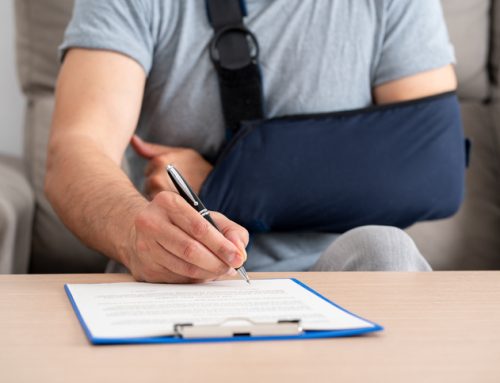
Lost in the debate over bad actors is the reality that many Californians have genuine, serious claims following accidents — and that ethical personal injury representation does exist and serves a real function.
Under California law, attorneys are permitted to enter into financial referral arrangements with other attorneys, but all such agreements must comply with State Bar Rule 2-200, which requires client disclosure and consent. The bar that governs physician referrals in relation to attorney compensation is less explicit, which is the precise gap the ballot measure seeks to close.
For accident victims navigating serious injuries, the difference between legitimate and predatory representation can be significant. Firms that prioritize their clients’ actual medical needs over billing volume, that maintain clear fee agreements, and that don’t pressure clients into excessive treatment, provide genuine value — particularly against insurance companies that routinely dispute valid claims.
The California State Bar’s attorney search tool allows residents to verify an attorney’s licensing status and check for any disciplinary history before hiring.
Sonoma County and the broader North Bay region have access to experienced local counsel. North Bay Legal provides personal injury representation in the Santa Rosa area with a focus on transparent client relationships — the kind of firm-client dynamic that stands in contrast to the volume-driven, billboard-law-firm model critics are targeting with this ballot measure.
The Bigger Picture: Why This Matters Beyond California
California’s ballot fight matters nationally because it’s a test case for how states respond to the rising cost of litigation in the auto insurance market. Florida passed significant tort reform in 2023, restricting attorney fee multipliers and one-way fee provisions in insurance disputes. The results are still being measured, but Florida’s insurers have reported some stabilization — though consumer advocates argue the reforms made it harder for policyholders to challenge wrongful claim denials.
California’s approach, if the ballot measure passes, would be broader and constitutionally embedded, making it harder to undo through future legislation.
The outcome depends, in part, on whether California voters trust that the problem being solved — inflated claims and physician kickbacks — is real and widespread enough to justify reforms that critics say will restrict access to justice. The data on insurance fraud suggests the underlying problem is genuine. The question of whether this particular solution is proportionate, or whether it’s designed more to protect Uber’s bottom line than California drivers’ wallets, is where the debate gets legitimately complicated.
What California Drivers Can Do Right Now
Regardless of how the ballot measure shakes out, there are steps drivers can take to protect themselves:
- Compare insurance quotes annually. Rates vary significantly between carriers even within the same ZIP code.
- Understand your uninsured motorist coverage. With roughly 17% of California drivers uninsured, this coverage is not optional in any practical sense.
- Document accidents thoroughly. Photographs, dashcam footage, and written notes are your primary defense against inflated claims.
- Consult an attorney if you’re the one injured. Not every attorney operates on a predatory model, and having legal guidance after a serious accident is often the difference between fair and inadequate compensation.
- Report suspected fraud. The California Department of Insurance maintains a fraud tip hotline for reporting suspected staged accidents or fraudulent billing.
The ballot measure will be decided by California voters in November 2026 — if it clears the 874,641 valid signatures required by June 8, 2026 to qualify. Either way, the cost of car insurance in California isn’t going down anytime soon. And the debate over who’s responsible — attorneys, doctors, insurers, or all of the above — is only going to get louder.



Leave A Comment