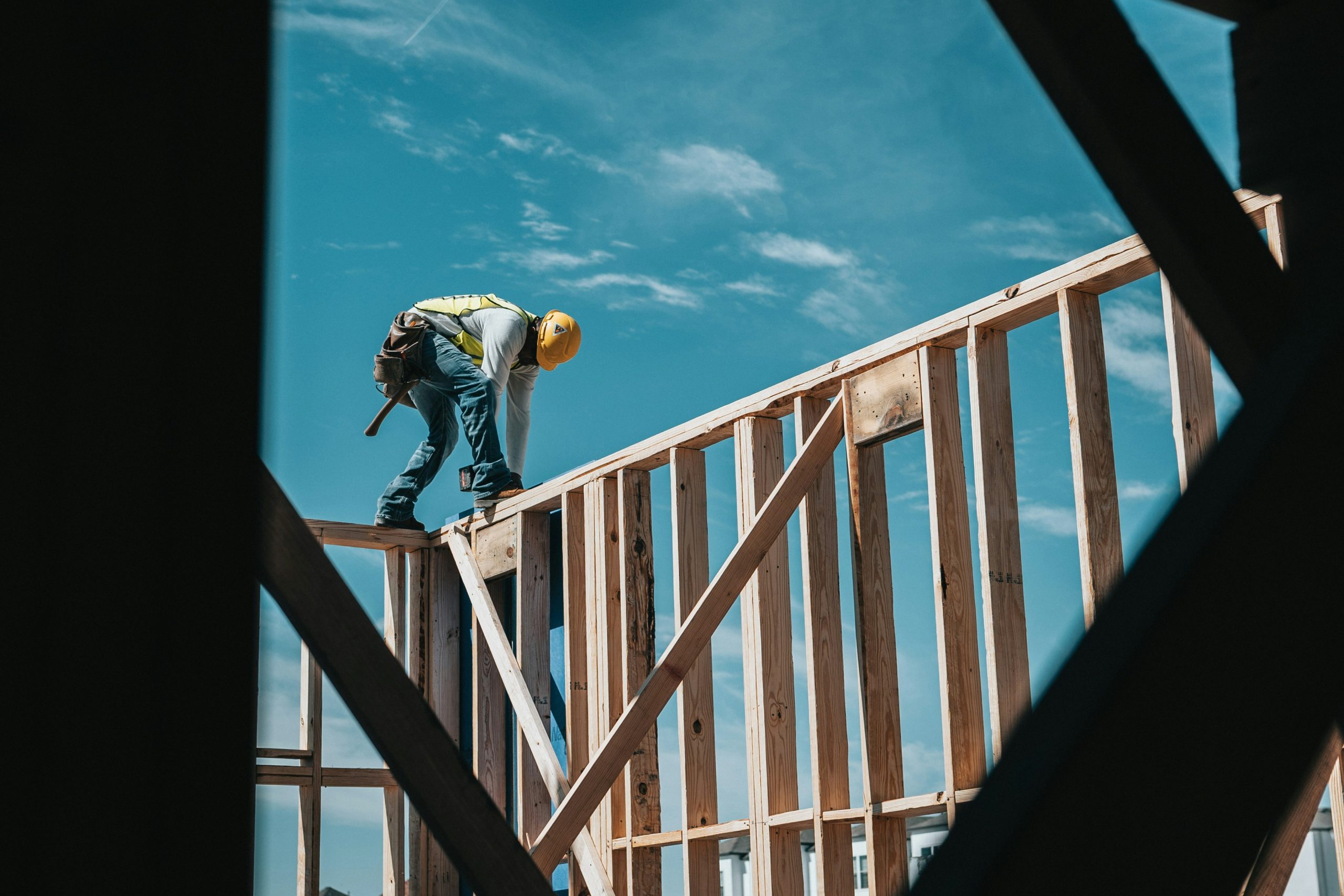
If you’ve driven through a Southern California neighborhood lately, or watched a construction crane swing over a Seattle skyline, you’ve already witnessed something big happening on the West Coast — and it goes far deeper than new buildings going up. The way homes, offices, and infrastructure projects are being designed, permitted, and built right now is changing in ways that most people haven’t fully registered yet.
From sweeping new building codes that rewire how contractors operate, to wildfire-resilient construction methods changing what neighborhoods look like in Los Angeles, to the quiet rise of factory-built housing, the West Coast construction industry is in the middle of one of its most transformative periods in decades. And for average homeowners, developers, and communities, it matters quite a bit.
Here’s what’s driving the change — and what it means for anyone who builds, buys, or simply lives in a West Coast community.
California’s New Building Code Is a Big Deal — Even If Nobody’s Talking About It
On January 1, 2026, the 2025 California Building Standards Code went into full effect, applying to all new permit applications filed on or after that date. For most people, that sounds like bureaucratic fine print. But its reach is surprisingly broad — and it touches everything from the wiring in your walls to how your roof is built.
One of the biggest changes is the creation of a standalone Wildland-Urban Interface (WUI) Code, now codified as Title 24, Part 7. Previously, wildfire-resistance requirements were scattered across various sections of the building code. Now they’re consolidated into a single enforceable standard that governs roofing materials, exterior vents, decking, and the outer walls of homes in fire-prone zones. If you’re building — or rebuilding — in a high-risk area, this is the rulebook your contractor is working from.
There’s also a major push toward electrification. The updated Energy Code requires new homes to be built with expanded electrical service capacity and EV-ready infrastructure, so future upgrades are simpler and cheaper. For single-family homes, rough-in wiring is increasingly expected upfront. Builders and electricians are now coordinating more closely than ever just to get projects off the ground.
The significance of these changes is hard to overstate: due to recent legislation freezing residential code updates until 2031, this is the last major residential code revision California will see for at least five years. Whatever is built under these standards today will be governed by them for a long time to come.
Los Angeles Is Rebuilding — But It’s Complicated
Perhaps nowhere is the collision of construction challenges more visible than in the communities scorched by the January 2025 Palisades and Eaton Fires. The fires destroyed more than 13,000 homes, displaced tens of thousands of residents, and set off what has become one of the most complex rebuilding efforts in California history.
The early numbers show progress — but also just how hard this is. More than 2,600 residential permits have been issued across the Palisades and Altadena, roughly one for every five homes lost. Compared to past disasters, that pace is genuinely fast. After the 2018 Camp Fire — which destroyed a similar number of homes — only 385 permits had been issued at the one-year mark. After the 2023 Maui fire, construction on the very first home didn’t begin until nearly a year after the flames were out.
But permits aren’t finished homes. Fewer than a dozen homes had been fully rebuilt by the one-year anniversary. Insurance battles, cost overruns, and the sheer complexity of rebuilding in a city like Los Angeles have slowed actual construction significantly. Research from UCLA found that as of mid-2025, seven in ten Altadena homeowners whose property was severely damaged had not yet begun taking steps to rebuild or sell.
For those who are moving forward, costs are staggering. New fire-resistant homes in Pacific Palisades are running around $650 per square foot — meaning a 4,000-square-foot rebuild can easily cost $2.6 million. Even smaller, streamlined builds in Altadena are coming in around $400 a square foot when developers can guarantee fixed pricing.
That’s forcing builders, architects, and policymakers to get creative — fast.
Factory-Built Homes: From Emergency Solution to Long-Term Strategy
One of the most interesting developments to emerge from the LA rebuild effort is a renewed interest in factory-built housing. Governor Newsom’s administration has been actively promoting it as a tool for getting fire survivors back into homes faster, and early results are encouraging.
Factory-built housing uses streamlined, low-waste production processes and incorporates durable, fire-resistant materials and climate-adaptive designs. One completed project — the Versa Villa in Pacific Palisades — was built using factory-constructed precision steel and completed less than six months from permit issuance. That’s a fraction of the timeline for conventional construction.
The concept isn’t new, but the scale of deployment is. And it connects to a broader national trend. Research from Dodge Construction Network shows that builders using offsite construction methods routinely achieve 20 to 50 percent reductions in construction schedules. The World Economic Forum has identified offsite and panelized construction as essential for improving productivity, reducing material waste, and scaling faster project delivery across the global industry.
On the West Coast, that efficiency isn’t a luxury — it’s increasingly a necessity. Labor shortages, rising material costs, and mounting regulatory complexity are all pushing developers toward methods that reduce variables and simplify coordination on the job site.
The Labor Crunch Is Real — and It’s Reshaping How Projects Get Built
Ask almost any general contractor in Southern California, the Bay Area, or the Pacific Northwest what keeps them up at night, and the answer is usually the same: finding enough skilled workers.
Construction employment has been tapering off across the West Coast, Northeast, and Rocky Mountain regions, with residential construction shedding jobs on a year-over-year basis. Even non-residential construction, which has been adding jobs, has slowed its pace significantly. To compete for workers, firms have been steadily raising wages — average hourly earnings in construction have been growing at above 4 percent annually for several years now. But raising wages only goes so far if the workers aren’t there to hire.
This labor reality is quietly but powerfully reshaping construction methods. Contractors are increasingly turning to modular building, prefabrication, and technology-assisted tools to offset gaps in their workforce. Robotics and AI-driven scheduling tools are becoming more common on larger commercial sites, improving measurement accuracy, reducing rework, and keeping projects on track even when crews are thinner than developers would like.
For homeowners and smaller developers, the practical takeaway is this: the best contractors are busy, timelines are longer than they used to be, and the project teams that are thriving in 2026 tend to be the ones who plan further ahead and lock in key subcontractors early.
Big Projects Are Still Moving — and Shaping What’s Next
Despite the headwinds, major construction activity continues across the West Coast. Data center construction is one of the clearest bright spots in the 2026 market, driven by the explosive demand tied to artificial intelligence and cloud computing. Vacancy rates in the sector sit at extremely low levels, and hyperscalers are pushing to build billion-dollar facilities at an aggressive pace.
Public infrastructure spending — on highways, water systems, transit, and climate-resilience projects — has also remained active. California’s preparation for the 2028 Los Angeles Olympics is expected to generate additional construction momentum over the next two years, adding to an already active pipeline of public works projects.
On the healthcare side, major hospital and medical office projects continue across Southern California and the Pacific Northwest, requiring sophisticated build methods, tight lot management, and systems designed specifically for clinical environments. These are the kinds of complex, high-stakes projects that require every member of the project team — from architects and engineers to general contractors and specialty trades — to work in close coordination from day one.
What Good Development Starts With: The Ground Beneath Your Feet
Amid all this change — new codes, new materials, new building methods — one thing remains constant: every successful construction project starts long before a single wall goes up. It starts with the land itself.
Before any West Coast developer or homeowner breaks ground, the site needs to be properly understood. That means boundary surveys to confirm legal property lines, topographic surveys to understand grades and drainage, and ALTA/NSPS surveys for commercial acquisitions. Getting that foundational data right isn’t a formality — it directly affects permit approvals, design decisions, neighbor relations, and long-term legal standing.
In Southern California especially, where terrain varies dramatically from coastal flats to canyon hillsides, and where urban infill projects sit on small, irregularly shaped lots, accurate land surveying is a critical early step in any project. For those navigating development in the region, working with licensed land surveyors servicing Southern California who understand local regulations, coastal zone requirements, and the complexities of hillside grading can save significant time and money down the line.
It’s the kind of detail that gets skipped when timelines are tight — and the kind that comes back to haunt projects when it does.
Where Does This Leave West Coast Construction Heading Into the Future?
The West Coast construction landscape in 2026 is defined by pressure on multiple fronts at once — rising costs, tighter regulations, a strained workforce, and the urgent need to rebuild communities damaged by fire and time. But it’s also defined by real innovation: smarter building methods, faster permitting in some areas, and a growing willingness among developers and policymakers to try approaches that would have seemed fringe even five years ago.
The firms navigating this environment most successfully are the ones that plan earlier, coordinate more carefully, and build resilience into their projects from the start — not just in the structural sense, but in the planning and permitting sense too.
For homeowners thinking about a rebuild or renovation, for developers eyeing a new project, or for communities trying to understand what comes next after disaster — the West Coast construction story in 2026 is ultimately one of adaptation. The rules have changed. The methods are changing. And the builders and communities that come out ahead will be the ones who saw that coming and prepared accordingly.





Leave A Comment